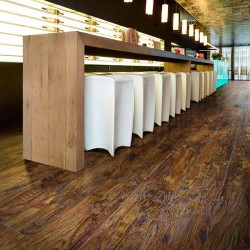
 Both LVT and laminate are durable, affordable and attractive alternatives to traditional hardwood and ceramic flooring options. Both are made in layers and include a wear layer that increases their strength and durability and makes them easier to clean and maintain, and a design layer that allows them to almost perfectly mimic the look of natural materials such as wood and stone.
LVT is waterproof
While both LVT and laminate are structured similarly, their composition varies. Laminate consists mainly of high-density fiberboard, which is a wood product. This means that laminate is not waterproof and therefore much more susceptible to water damage, which limits where you can apply it to your home. LVT, on the other hand, consists mainly of PVC and provides superior moisture resistance compared to laminate. Unlike laminate, LVT can be used in any room in your home, including the bathroom, kitchen, and laundry room. However, it is also important to note that while LVT products are waterproof, the application is not. For example, LVT comes in planks and tiles that sit side by side, causing multiple joints. Thus, even though planks and tiles are waterproof, there is a possibility of water or moisture seeping through the joints if they are not installed correctly. Therefore, application to moisture-prone environments must be done very carefully.
Related Post: We recommend that you also read the pvc floor covering price article on the subject.
LVT is quiet and soft
Tarkett LVT is comfortable and soft. LVT is much quieter underfoot compared to laminate.
 Flooring Systems